
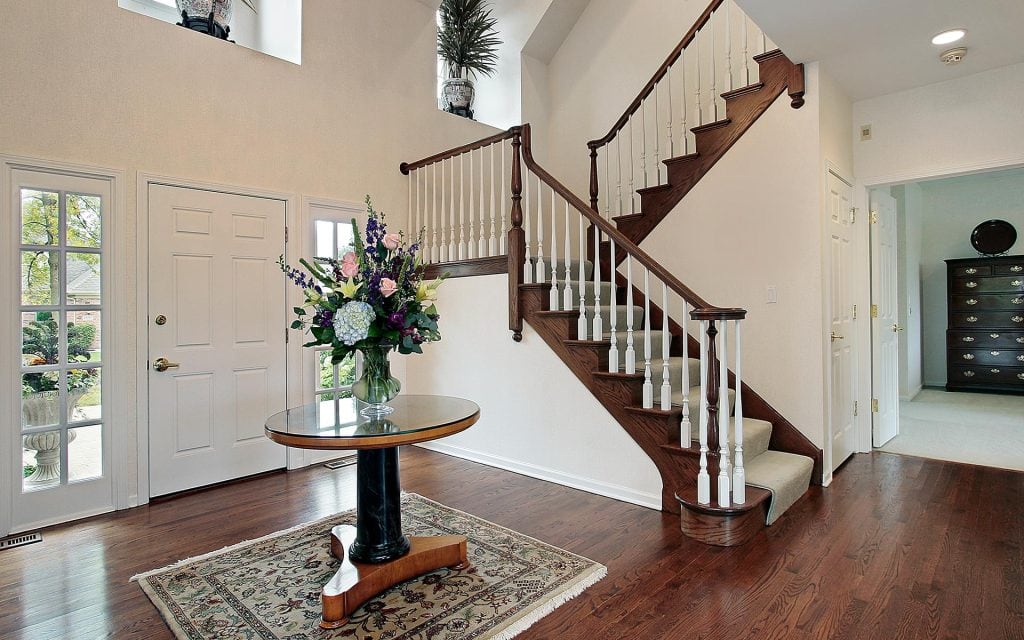
With stairwells and two-story foyers you face serious fall risks, unstable ladders, and hazardous paint fumes, so you should assess access, secure sturdy platforms, and maintain good ventilation; use proper equipment, safety harnesses, and airflow management and keep bystanders clear. Plan lighting, protect surfaces, and follow manufacturer instructions for products and respirators; if conditions exceed your comfort or equipment, hire professionals experienced with high-access work.
Key Takeaways:
- Use proper access and fall protection: stable ladder or scaffold, harness for two-story work, avoid overreaching and have a spotter.
- Wear appropriate PPE and ensure ventilation: eye protection, respirator/mask for fumes, gloves, and airflow for solvent-based products.
- Prepare and secure the work area: remove trip hazards, cover floors with drop cloths, secure lighting and cords, and coordinate access with household members.
Elevating Safety Practices for High Spaces
You encounter two-story foyers and stairwells that commonly measure 16–22 feet; plan for that vertical range by choosing systems that minimize fall risk. Use scaffolding or an aerial lift for sustained work above 20 feet, deploy fall arrest or guardrails when working over open landings, and always secure access points on stairs with a stable platform or ladder leveler to prevent tipping on uneven surfaces.
The Importance of Proper Ladder Use
You must maintain three points of contact, avoid standing on the top two rungs, and position extension ladders at a 4:1 angle (1 foot out for every 4 feet up). Inspect ladders before each shift for cracked rails, missing feet, or bent rungs. Tie or brace the top, keep tools in a belt or hoist them separately, and never overload—falls from ladders remain a leading cause of painting injuries.
Selecting the Right Ladder for Your Project
You should match ladder length and duty rating to the job: choose a ladder at least 4 feet taller than your work height and have extension ladders extend 36 inches above the landing. Pick materials for the environment—fiberglass near electrical sources, aluminum for lightness. Duty ratings: Type III 200 lb, Type II 225 lb, Type I 250 lb, Type IA 300 lb, Type IAA 375 lb; opt for Type IA/IAA for professional jobs.
For stairwell work, select specialty options like adjustable-leg ladders, articulating ladders, or platform ladders that convert to a stable workdeck. Use ladder levelers on uneven stair runs, or consider a scaffold with outriggers for multi-hour jobs. Factor in your body weight plus equipment—add at least 50 lb margin when choosing duty rating—and ensure feet have non-slip pads and a wide base to resist torsional loads on narrow stair landings.
Protective Gear: Armor Against Accidents
You outfit your crew like a small armored unit: inspect PPE before each use, replace cracked goggles or frayed gloves, and keep a clean respirator for solvent work. Use a calibrated sound meter to flag noise above 85 dB so hearing protection goes on. Hard hats, slip-resistant boots, and high-visibility vests reduce trip and impact incidents on narrow stairs; a single missed step on a 12–18 foot stairwell can cause severe injury, so treat PPE as mission-imperative gear.
Essential Personal Protective Equipment (PPE)
You should carry a kit including a NIOSH-approved respirator (N95 for dust, P100 or organic-vapor cartridges for solvents), ANSI Z87.1 safety goggles, chemical-resistant nitrile or neoprene gloves, a hard hat, and slip-resistant boots with puncture-resistant soles. Add hearing protection whenever levels exceed 85 dB and keep a stocked first-aid kit. Tag damaged items out of service and log replacements to keep compliance and safety audits clean.
The Role of Safety Harnesses in Two-Story Projects
You rely on a full-body harness tied to an anchor rated 5,000 lb for work over two-story foyers, where falls of 14–20 feet are common. Use a shock-absorbing lanyard or self-retracting lifeline to limit fall forces and vertical travel; many manufacturers specify maximum arrest forces under 1,800 lbf. Proper harness selection and anchorage reduce the chance of serious injury when scaffolds, ladders, or platforms fail.
You must inspect the harness webbing, stitching, D-rings, and connectors before every shift and document annual detailed inspections per ANSI/ASSP Z359 guidance. Choose beam or roof anchors designed for the job, prefer self-retracting lifelines when you need mobility, and use double-anchorage tie-offs while repositioning. Maintain a written rescue plan that gets a suspended worker down within minutes; delayed rescue increases suspension trauma risk dramatically.
Navigating the Risks of Stairwell Painting
Working in tight stairwells and two‑story foyers raises specific hazards you must address: falls from ladders or scaffolds, limited escape routes, and concentrated VOC exposure in confined spaces. Follow the 4:1 ladder angle rule (1 foot out for every 4 feet up), use fall protection when working above 6 feet per OSHA construction standards, and prioritize ventilation or low‑VOC products to reduce inhalation risks while you paint.
Common Hazards in Stairwell Environments
Narrow stair widths (standard residential minimum ≈ 36 inches), shallow treads (<10 inches), dim lighting, loose handrails, and wet paint that creates slippery surfaces all increase incident risk. Overhead obstructions and trailing extension cords introduce trip and contact hazards, while poor ventilation concentrates fumes—forcing you to balance access, visibility, and air quality on every job.
Strategies for Preventing Falls and Injuries
Start with a written hazard assessment, then use engineered solutions: install guardrails, harnesses, and stable platforms for work over 6 feet, choose scaffolds over ladders for prolonged tasks, and enforce the 4:1 ladder setup for quick access. Inspect equipment daily, secure tools with lanyards, tape down drop cloths, and require nonslip footwear so you reduce slips, trips, and fall severity.
Practical implementation means you set up scaffolds with planked platforms and toe boards when painting multi‑step runs; for two‑story foyers consider a mobile scaffold or boom lift rated for the ceiling height rather than extended ladders. Anchor fall‑arrest systems to a structural point rated for the load, document daily inspections on a checklist, and provide a brief toolbox talk before work—OSHA mandates training by a competent person. Track incidents and adjustments: crews that switch to scaffold platforms typically report fewer near‑misses and faster cycle times, because stability and hands‑free work let you focus on finish quality rather than balance.
Material and Tool Management: A Key to Efficiency
You inventory paint, primer, and finishes by room and sheen, noting VOC levels and estimated coverage—most stairwells need ~350–400 sq ft per gallon, so a two-story foyer often requires 3–5 gallons total. Label opened cans with date and color, store solvents in a locked, ventilated cabinet, and keep a small parts kit (mixing sticks, extra tips, spare belts) within arm’s reach to avoid repeated trips up and down the stairs.
Organizing Your Workspace for Maximum Safety
Designate a 36-inch clear pathway for egress and material movement, and create separate zones for clean supplies, waste, and wet work; hang extension cords overhead with cable hooks and use color-coded bins for brushes and rollers. Mark trip hazards with tape, secure drop cloths with staples or low-profile gaffer tape, and stage ladders on stable landing pads to prevent slips during high-traffic shifts.
Best Practices for Handling Paint and Equipment
Keep paint cans sealed and labeled with room and date, use pump systems for 5-gallon buckets to reduce spills, and place solvent-soaked rags in a sealed metal container to prevent spontaneous combustion; OSHA recommends storing flammable materials in approved cabinets. Use NIOSH-approved respirators for solvents and keep grounded metal containers for mixing conductive coatings.
Adopt a maintenance log for sprayers and compressors—clean filters after every 8 hours of use and inspect hoses for cracks weekly; on one stairwell job these checks cut equipment downtime by 40%. You should wear nitrile gloves for solvent exposure, eye protection for pressurized tasks, and keep spill kits (absorbent pads, neutralizer) within 10 feet of work zones to contain incidents fast.
Professional Insights: When to Call in the Experts
If your stairwell or two-story foyer exceeds 6 feet of working height, has complex trim, exposed electrical fixtures, or you detect flaking paint on surfaces of homes built before 1978, you should consider pros. A two-person crew typically completes these jobs in 1–2 days using scaffolding, OSHA-grade fall protection and commercial sprayers, reducing your fall risk and downtime compared with DIY attempts.
Recognizing Your Limits
When ladder use requires constant repositioning or you need to work above finished hardwood, fragile plaster, or ornate railings, that signals a limit. Homes built before 1978 may have lead paint requiring EPA Lead-Safe certified contractors; exposure risk increases during scraping or sanding. If you lack rigging skills, scaffolding experience, or a helper to spot you, hiring a team keeps your property and health safer.
Benefits of Hiring Professional Painters
Professionals bring specialized tools—airless sprayers, 35–40 ft scaffolding, HEPA vacuums—and methods that cut sanding and recoating time while producing uniform coverage. You gain insurance coverage, formal warranties (commonly 1–5 years), precise color matching, and less mess; a pro crew often avoids costly callbacks from missed spots or paint drips that DIY jobs frequently incur.
Expect detailed prep: pros typically spend 30–50% of project time masking and repairing surfaces, apply high-build primers for stain blocking, and use commercial-grade paints that require fewer coats. On average, professional material selection and technique reduce total paint waste and rework; that efficiency often offsets labor costs and preserves finishes for years longer than typical DIY results.
Final Words
Presently you must assess ladder placement, use proper fall protection, clear the area below, and work with a partner when tackling two-story foyers; secure drop cloths and mask surfaces, choose scaffolding or extension ladders rated for height and load, maintain ventilation and electrical safety, and consult professionals for complex ceilings. These safety practices protect your team and ensure a professional finish.
FAQ
Q: How do Ambler painters prevent falls when working in stairwells and two-story foyers?
A: Ambler painters use a combination of engineered controls and safe work practices: secure scaffolding with guardrails and toe boards for extended overhead work; ladder use only for short-duration tasks with a spotter and a firm base; fall-arrest harnesses and anchored lifelines when work zones expose workers to an unprotected drop; tool lanyards to stop falling objects; and clear, stable access/egress for workers so they don’t balance on handrails or step edges. All equipment is inspected before use and set up on even, supported surfaces to minimize tipping or collapse.
Q: What ladder and scaffold guidelines do Ambler painters follow in narrow stairwells and high foyers?
A: Painters choose the right equipment for the task: multi-position ladders or platform ladders for confined stair landings; rolling or fixed scaffolds with outriggers and levelers for two-story work; and extension ladders where safe foot placement and tie-offs are possible. Ladders are placed at a 4:1 angle when leaned, locked fully when used as step ladders, and never used on unstable surfaces. Scaffolds are assembled per manufacturer specs, planked securely across supports, and load-rated for people, tools and materials. If workspace is too tight for safe setup, Ambler painters use alternative methods such as boom lifts operated from outside the foyer or rope-access technicians where appropriate.
Q: How do painters manage fumes, dust and ventilation in enclosed stairwells and foyers to protect occupants and crew?
A: Painters ventilate by opening doors and windows when possible, and by running high-capacity exhaust fans to direct air outdoors. They prefer low-VOC and water-based coatings in occupied structures, schedule work when occupants can avoid the area, and post warnings about fumes. Crew members use appropriate respiratory protection (NIOSH-rated respirators) for solvent-based products or when ventilation is limited. Dust control is handled with HEPA-filtered vacuums during prep, along with plastic containment barriers and negative-pressure setups to prevent migration into living spaces.
Q: What steps are taken to protect stairs, railings, and building occupants during the painting process?
A: Surfaces are protected with non-slip floor runners and heavy-duty drop cloths taped securely to prevent tripping. Handrails and bannisters are wrapped with breathable, padded coverings or film to prevent paint transfer while preserving grip. Work zones are cordoned off with signs and temporary barriers, with clear alternate routes communicated to occupants. Fragile fixtures, mirrors and artwork are removed or masked; stair treads are marked as wet-dry to prevent accidental use; and stair lighting is maintained or supplemented with battery-powered lights to keep egress safe.
Q: What electrical and lighting safety practices are used when painting high ceilings and fixtures in two-story foyers?
A: Electrical circuits to light fixtures and switches are de-energized when work is within reach of live parts, and lockout/tagout procedures are applied when applicable. Portable lighting is properly rated and positioned to avoid glare and shadows that could hide hazards. Extension cords and power tools are routed to avoid walkways or are covered with cord protectors. When working near fixtures, painters use insulated tools, remove or cover bulbs and fixtures, and consult qualified electricians for any rewiring or fixture removal to avoid shock or fire risk.

Ray is an inspiring leader with a strong work ethic stemming from his exemplary upbringing in a caring and loving family environment. His parents modeled the importance of integrity and hard work to him and his siblings, values which Ray now instills in his teenage daughter. As the owner of Aspen Painting & Wallcovering, Inc., he leads by example by expecting nothing but the best from himself and his employees. His primary goal is to provide superior service and quality craftsmanship to each of his clients so that they become enthusiastic ambassadors for the company. Ray is a passionate team player who always strives to exceed expectations.