
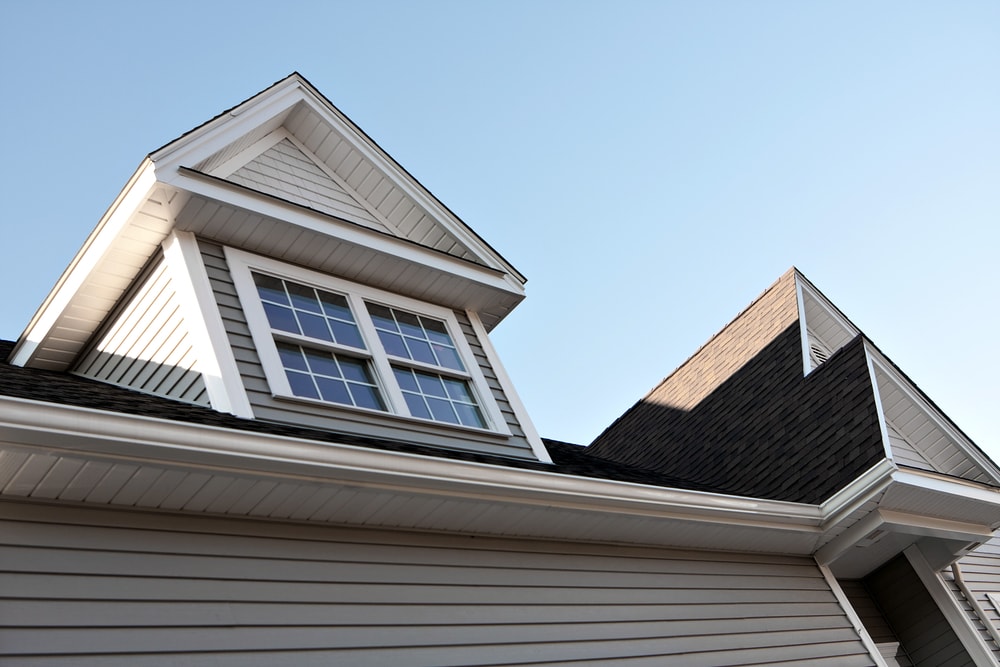
One of the most intriguing paint projects you can undertake is staining your siding. This is due in no small part to the fact that staining itself offers a unique opportunity to introduce some color into your property while simultaneously retaining or even enhancing a natural look for your property.
This is especially true if you are going for a rustic look.
It can be a bit hard to balance paint jobs with a rustic theme, in part because painting tends to cover up all the wood, which is obviously a huge part of the rustic look in the first place. What’s more, there’s something to be said for the rugged and “authentic” feel that many rustic décor themes try to evoke. This stands in opposition to the polished look visible in other home décor schemes.
That’s what makes it so much more powerful when you’re able incorporate staining for your property’s siding. It allows you to more fully take advantage of the possibilities which coloring your wood can open up in terms of appearance, all without sacrificing the rustic authenticity of a wood-first appearance.
Still, the question remains – what are the main types of stain that you can use for your siding, and which one offers the best fit for your particular needs?
- Clear Stain
First, there’s the option of using clear staining products. These are best if you want to show off the wood underneath the staining to the greatest extent possible while still adding a bit of stain to the surface. As a rule of thumb, the more staining you add, the thicker and opaquer the staining tends to be. As such, clear staining tends to be very light.
If you are looking to achieve a clear, light color with your staining, these options are probably the best for your particular project.
- Opaque Stain
The flip side of that, naturally, is opaque staining. Whereas clear staining leaves much of the underlying wood visible, with just a light smattering of colored staining atop it, opaque staining can be so dark and thick as to make the wood underneath very hard to see. While the wood won’t become “invisible” (at least not unless you really slather on heaps of stain) this is the kind of staining you will want to add if you want your staining, rather than the wood, to be the focus.
- Semi-Clear Stain
Striking a balance between the two, as you might imagine, is semi-clear stain. If both of those aforementioned options seem a bit too extreme for your ends, or you want to more carefully balance the degree to which your wood versus staining is emphasized, staining colors which fall on the semi-clear spectrum are probably the way to go.
- Choosing the Right Option
With all that in mind, you’ll be able to choose the right type of stain for your needs. Keep in mind that as with paint, staining can fade, so whatever your choice may be, make sure it’s something you can easily reapply should it require a touch-up.
With those factors in mind, you’ll be able to choose great staining for your siding.
FAQ
What are the main types of stains used for siding?
The primary types of stains for siding include transparent stains, semi-transparent stains, semi-solid stains, and solid stains. Transparent stains allow the natural wood grain to show through with minimal color change. Semi-transparent stains offer a bit more color while still revealing some grain. Semi-solid stains provide deeper color and hide most of the grain, and solid stains act almost like paint, completely covering the wood grain with a uniform color.
How does a transparent stain benefit siding?
Transparent stains are ideal for showcasing the natural beauty of wood siding. They penetrate the wood to protect it from moisture and UV damage while maintaining the original texture and grain visibility. They are best for new or well-maintained siding where the wood’s natural look is desired.
What makes semi-transparent stains a popular choice for siding?
Semi-transparent stains strike a balance between color and wood grain visibility. They add a subtle tint to enhance the siding’s appearance while offering protection against weathering. This type is often chosen for siding that needs a refreshed look without losing the wood’s natural character.
When should I use a semi-solid or solid stain on siding?
Semi-solid stains are suitable for older siding or wood with imperfections, as they mask much of the grain and flaws while still allowing some texture to show. Solid stains are best when you want a completely opaque finish, similar to paint, to cover significant wear or to achieve a specific color. Both provide excellent protection against the elements.
How do I choose the right stain type for my siding?
Choosing the right stain depends on the condition of your siding and the look you want. For new or pristine wood, transparent or semi-transparent stains highlight natural beauty. For weathered or damaged siding, semi-solid or solid stains offer better coverage and durability. Also, consider the level of maintenance you’re willing to commit to, as transparent stains may require more frequent reapplication compared to solid stains.

Ray is an inspiring leader with a strong work ethic stemming from his exemplary upbringing in a caring and loving family environment. His parents modeled the importance of integrity and hard work to him and his siblings, values which Ray now instills in his teenage daughter. As the owner of Aspen Painting & Wallcovering, Inc., he leads by example by expecting nothing but the best from himself and his employees. His primary goal is to provide superior service and quality craftsmanship to each of his clients so that they become enthusiastic ambassadors for the company. Ray is a passionate team player who always strives to exceed expectations.