
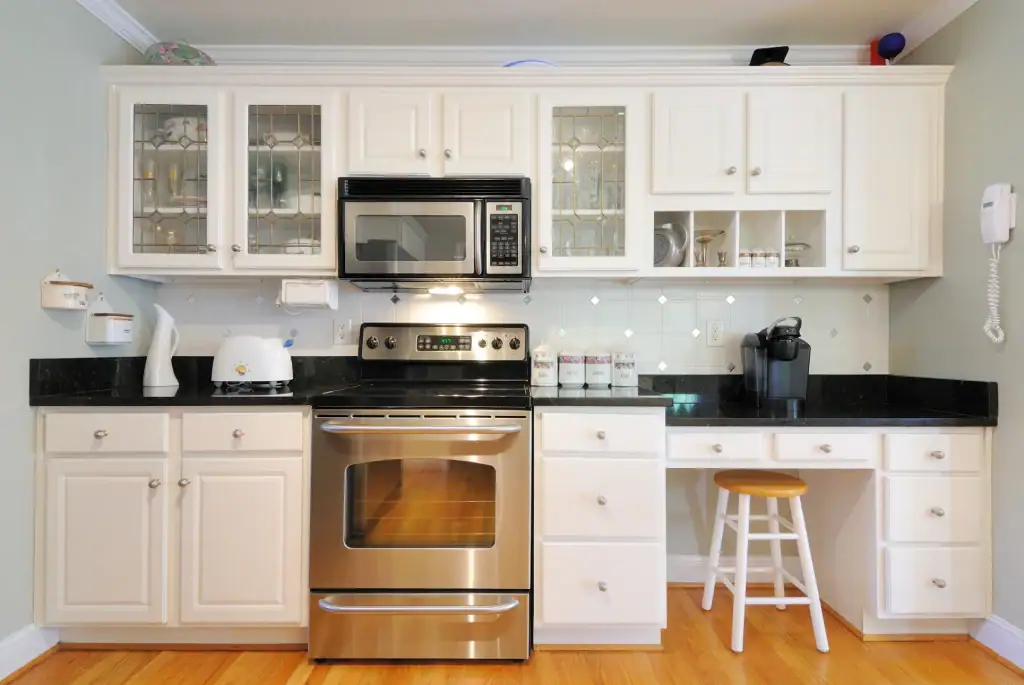
Your kitchen layout works, the boxes are solid, and the cabinets are real wood — they just look dated. Before you spend tens of thousands tearing them out, consider this: professional kitchen cabinet painting in Newtown, PA can give you a crisp, factory-smooth finish at a fraction of the cost of replacement. Here’s what you’ll learn: why a quality cabinet paint job rivals new cabinets, what actually goes into a flawless finish, how painting compares to refacing and replacing, and how to make the result last.
Why paint cabinets instead of replacing them?
Replacing kitchen cabinets is one of the most expensive items in any remodel. Painting the cabinets you already have delivers most of the visual transformation for a small share of the price — and keeps a perfectly good set of solid-wood boxes out of a landfill.
- Dramatic change, smaller budget: New color, same footprint, far less money than new cabinetry.
- Faster: A repaint is measured in days, not the weeks a full replacement takes.
- Less disruption: No demo, no new countertops required, no plumbing or electrical surprises.
- Sustainable: You’re refreshing quality wood rather than scrapping it.
For homeowners in Newtown and nearby Holland, where so many kitchens were built with sturdy oak and maple cabinetry, painting is often the smartest update dollar-for-dollar.
What a factory-smooth cabinet finish actually takes
The difference between a DIY cabinet repaint and a professional one comes down to prep and application. A factory-smooth cabinet finish — no brush marks, no grain telegraphing through — is the result of a disciplined process:
- Label and remove. Doors, drawer fronts, and hardware come off and get tracked so everything goes back exactly where it belongs.
- Degrease thoroughly. Kitchens are greasy. Cabinets are cleaned with a degreaser so coatings can actually bond.
- Sand and fill. Surfaces are scuff-sanded; dents and dings are filled and sanded flush.
- Fill the grain (for oak). Painting oak kitchen cabinets smooth means filling that deep open grain with a grain filler or high-build primer — otherwise the texture shows through.
- Prime with a bonding primer. A quality adhesion primer is what keeps paint from chipping later.
- Spray the topcoats. Sprayed cabinet doors lay down a glass-smooth coat that a brush and roller simply can’t match. Multiple thin coats beat one heavy one.
- Cure before reassembly. Cabinet enamels need time to harden; rushing this step is how finishes get dinged on day one.
The best paint for kitchen cabinets
Wall paint won’t cut it on cabinets. The best paint for kitchen cabinets is a waterborne alkyd or acrylic cabinet enamel engineered to level out smooth and cure to a hard, washable surface that stands up to fingerprints, cleaning, and daily use. These enamels are the backbone of a durable cabinet finish — and they’re worth every penny in a room that gets touched hundreds of times a day.
Painting vs. refacing vs. replacing
| Cabinet painting | Refacing | Full replacement | |
|---|---|---|---|
| Relative cost | $ | $$ | $$$$ |
| Timeline | A few days | About a week | Several weeks |
| Keeps your layout | Yes | Yes | Not necessarily |
| Color flexibility | Any color | Limited to veneer options | Any |
| Best when | Boxes are solid, you want a new look | Boxes solid, doors worn | Layout/boxes are failing |
If your cabinet boxes are sound and you simply want them to look new, cabinet painting vs. refacing usually favors painting — you get full color freedom and the biggest savings. Save replacement for when the cabinetry itself has failed.
Choosing your color
A white cabinet makeover remains the most popular choice for good reason — it brightens the whole kitchen and pairs with nearly any countertop. But warm whites, soft greiges, deep navies, and forest greens are all having a moment. A few guidelines:
- Lighter colors make a smaller Newtown kitchen feel more open.
- Two-tone (lighter uppers, darker lowers or island) adds depth without overwhelming.
- Test against your fixed elements — countertop, backsplash, and flooring aren’t changing, so build around them.
For deeper color guidance, manufacturers like This Old House and major paint brands publish helpful cabinet-color resources worth a look.
Making the finish last
A professionally painted kitchen should look great for many years. To protect it:
- Give the finish its full cure time before heavy use.
- Wipe spills promptly; clean with mild soap, not harsh abrasives.
- Add soft-close bumpers to reduce slamming wear.
- Keep a labeled touch-up jar for the occasional ding.
Is cabinet painting right for your Newtown kitchen?
If your boxes are solid and you love your layout but hate the look, kitchen cabinet painting is almost always the better investment over replacement. If the cabinetry is structurally failing or you want a completely different floor plan, that’s when replacement earns its cost.
When you’re ready for a finish that looks factory-applied, experience matters — spraying cabinets cleanly takes the right setup and a controlled process. Our professional cabinet painting brings that shop-quality finish to your kitchen, and if you’re weighing the numbers, our breakdown of what cabinet painting costs lays out the factors. It’s the same care that’s earned the trust of homeowners who rely on a dependable Newtown painting company for lasting results.
Ready for a kitchen that looks brand new?
You don’t need a full remodel to fall back in love with your kitchen. Aspen Painting & Wallcovering delivers smooth, durable, beautifully painted cabinets for homeowners across Newtown, Holland, and the surrounding Bucks County communities — Clean, Courteous, Reliable, start to finish.
Call 215-773-8422 or book a free, no-pressure estimate. We’ll look at your cabinets, talk colors and finishes, and show you how affordable a like-new kitchen can be.
Frequently Asked Questions
How long does kitchen cabinet painting take?
Most Newtown kitchen cabinet projects take about three to five days, depending on the number of doors and drawers and the dry/cure time between coats. A quality sprayed finish can’t be rushed, so a little patience pays off in durability.
Is painting cabinets cheaper than replacing them?
Yes — significantly. Kitchen cabinet painting typically costs a small fraction of full replacement because you keep the existing boxes and skip demolition, new countertops, and plumbing or electrical work. It’s the most budget-friendly way to get a like-new kitchen.
Will painted kitchen cabinets chip or peel?
Not when they’re done right. A professional process — degreasing, sanding, a bonding primer, and a durable cabinet enamel sprayed in thin coats — creates a hard, washable finish built for daily use. Skipping prep is what causes chipping.
Can you paint oak cabinets so the grain doesn’t show?
Yes. The deep, open grain of oak is filled with a grain filler or high-build primer and sanded smooth before the topcoats go on, giving you a clean, factory-smooth surface instead of a textured one.
What is the best paint for kitchen cabinets?
A waterborne alkyd or acrylic cabinet enamel. These are formulated to level out smooth and cure to a hard, scrubbable finish that handles fingerprints and cleaning far better than ordinary wall paint.

Ray is an inspiring leader with a strong work ethic stemming from his exemplary upbringing in a caring and loving family environment. His parents modeled the importance of integrity and hard work to him and his siblings, values which Ray now instills in his teenage daughter. As the owner of Aspen Painting & Wallcovering, Inc., he leads by example by expecting nothing but the best from himself and his employees. His primary goal is to provide superior service and quality craftsmanship to each of his clients so that they become enthusiastic ambassadors for the company. Ray is a passionate team player who always strives to exceed expectations.