
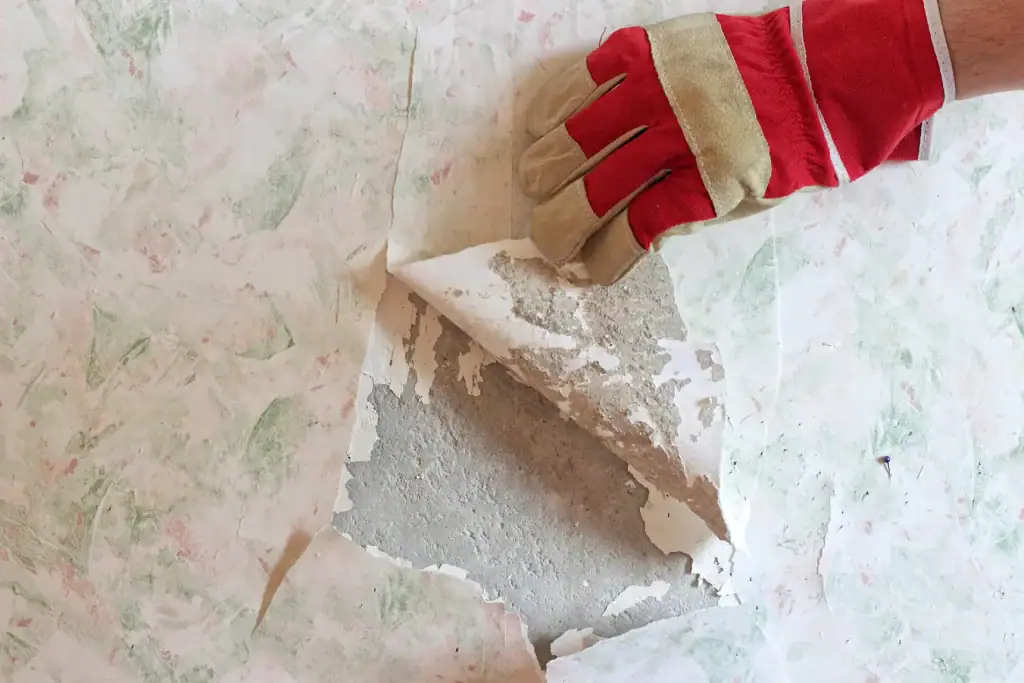
Wallpaper can add personality to a room, but when it starts to feel dated, faded, peeling, or mismatched with your current style, it can quickly become the one thing you want gone.
For many homeowners in Bucks and Montgomery County, wallpaper removal is the first step before repainting a bedroom, dining room, hallway, powder room, foyer, or full interior space. But before the paint color gets chosen, there is one important question to answer: what does wallpaper removal cost?
The answer depends on the room size, wallpaper type, wall condition, number of layers, adhesive strength, ceiling height, and the amount of repair work needed before painting.
Some wallpaper comes down cleanly. Other wallpaper fights every inch of the way.
That is why two rooms that look similar at first can have very different removal timelines and costs.
National cost guides often place professional wallpaper removal in a broad range, with per-square-foot estimates commonly starting at a few dollars and increasing when soaking, scraping, stubborn adhesives, or repairs are needed. Current cost data show wallpaper removal may range from about $0.60 to $3 per square foot in some cases. In contrast, more involved removal methods can cost more, especially when walls require additional prep before painting.
For local homeowners, the best way to think about cost is not just “How much to remove wallpaper?” It is “What will it take to get these walls ready for a smooth painted finish?”
Why Wallpaper Removal Cost Varies So Much
Wallpaper removal is not a one-fixed-price service because the work can range from simple to very labor-intensive.
A small powder room with one layer of newer wallpaper may be fairly straightforward. A two-story foyer with older wallpaper, tight seams, strong adhesive, and drywall damage may take much longer to complete.
The biggest cost driver is time.
Wallpaper removal often requires testing, scoring, steaming or soaking, scraping, adhesive removal, wall cleaning, sanding, patching, priming, and repainting prep. If the wallpaper was installed over unprimed drywall, removal can be especially tricky because the wall surface may tear.
Older homes in Bucks and Montgomery County may also have multiple layers of wallpaper. In some cases, a previous homeowner may have painted over wallpaper or installed new wallpaper over old wallpaper. That can add more labor and make the project less predictable.
The condition underneath the wallpaper matters just as much as the wallpaper itself.
Average Wallpaper Removal Cost Before Repainting
For planning purposes, many homeowners can expect wallpaper removal to cost a few hundred dollars for a smaller room and more for larger or more difficult spaces.
General pricing references show that wallpaper removal can cost between $200 and $2,000 for many projects, with average project totals often landing in the middle of that range. Per-square-foot pricing can vary widely depending on the removal method, with estimates ranging from about $0.60 to $3 per square foot, and higher rates for more involved removals.
Another current cost source estimates national wallpaper removal at $2.99 to $6.09 per square foot, showing how much pricing can vary depending on project assumptions, location, and complexity.
For homeowners preparing to repaint, the total cost may include more than removal. Wall repair, sanding, priming, and painting prep may also be needed before the final coat goes on.
That is why a low removal estimate may not always mean the full wall-prep process is covered.
Wallpaper Removal Cost by Room Type
Different rooms create different challenges.
A powder room may have less wall space, but tight corners, vanities, mirrors, fixtures, and trim can slow the work. A dining room may have more open wall space, but older wallpaper or chair rail details can add prep time. A staircase may require extra care due to its height and access.
Here is a general planning table for homeowners:
| Room or Area | Cost Level | Why It May Cost More or Less |
| Powder room | Moderate | Small space, but tight access around fixtures |
| Bedroom | Lower to moderate | Often, easier access and standard wall heights |
| Dining room | Moderate | Larger walls, trim details, and possibly older wallpaper |
| Kitchen | Moderate to higher | Cabinets, backsplash, grease, and tight cut-ins |
| Hallway | Moderate | Multiple doors, trim, corners, and traffic areas |
| Staircase or foyer | Higher | Height, access, ladders, and careful wall prep |
| Full interior | Higher | Multiple rooms, layers, repairs, and scheduling |
These are not exact prices. They are meant to help you understand why one room may be quicker, and another may require more labor.
What Affects Wallpaper Removal Cost the Most?
The biggest factor is the type of wallpaper.
Some wallpapers are made to peel more easily. Others have vinyl coatings, heavy textures, strong adhesives, or multiple layers that hold tightly to the wall. Vinyl wallpaper can be harder to remove because moisture may not pass through as easily.
The second major factor is how the wallpaper was installed.
Wallpaper applied over a properly prepared surface usually comes off more cleanly. Wallpaper applied directly to unprimed drywall can tear the wall surface during removal. That means extra repair work may be needed before painting.
The third factor is the wallpaper’s age.
Older wallpaper can become brittle. Adhesive can harden over time. Seams may lift unevenly. In some rooms, sections may peel off easily, while other areas remain firmly bonded to the wall.
Room layout also plays a role. High ceilings, stairwells, built-ins, tight bathrooms, and lots of trim can increase labor.
Why Repainting After Wallpaper Removal Requires Extra Prep
Removing wallpaper is only the first part of the job.
After wallpaper comes down, the wall may still have adhesive residue, rough patches, torn drywall paper, uneven texture, nail holes, dents, or moisture marks. Paint should not be applied over dirty, sticky, or damaged wall surfaces.
If adhesive remains on the wall, paint may not bond well. If torn drywall paper is not sealed correctly, the wall can bubble or look uneven after painting. If patches are not sanded smoothly, the finished paint may highlight flaws.
That is why wallpaper removal before repainting often includes several steps:
| Step | Why It Matters |
| Wallpaper testing | Helps determine how difficult removal may be |
| Surface protection | Keeps floors, trim, and nearby areas cleaner |
| Removal | Strips wallpaper from the wall surface |
| Adhesive cleanup | Helps prevent paint bonding issues |
| Wall repairs | Fixes torn paper, dents, cracks, and uneven areas |
| Sanding | Smooths the surface before primer |
| Priming | Helps prepare the wall for paint |
| Painting | Creates the final finished look |
Skipping prep can lead to visible flaws, peeling, or uneven paint. A fresh wall color only looks good when the surface underneath is ready.
Can You Paint Over Wallpaper Instead?
Some homeowners ask whether they can avoid removal and paint directly over wallpaper.
In certain cases, painting over wallpaper may be possible, but it is not always the best choice. It depends on the condition, texture, seams, and wall surface underneath.
If the wallpaper is peeling, bubbling, heavily textured, damaged, stained, or loose at the seams, painting over it can make the problem more obvious. Paint may also react poorly with adhesive or trapped moisture.
If the wallpaper is firmly attached and smooth, painting over it may seem tempting. However, it can cause future problems if the wallpaper begins to peel. Once paint is added, later removal can become more difficult.
For homeowners who want a cleaner long-term painted finish, removing the wallpaper and preparing the wall is often the better route.
Why Older Wallpaper Can Raise the Cost
Older wallpaper can be harder to remove because materials and installation methods vary.
Some older wallpaper was installed with strong adhesive. Some was placed over walls that were not sealed first. Some rooms may have two or three layers hidden under the top layer.
In homes across Bucks and Montgomery County, it is not unusual to find older dining rooms, bathrooms, hallways, and bedrooms with wallpaper that has been in place for many years.
Once removal begins, the condition underneath becomes clearer.
If the drywall paper tears, the wall may need to be sealed and skim-coated. If plaster walls are involved, the process may require a different approach. If old adhesive remains, it needs to be cleaned before the wall can be painted.
This is why wallpaper removal estimates often depend on an in-person look at the room.
How Wall Damage Changes the Final Price
Wall damage can turn a basic removal job into a more involved preparation project.
Common issues include torn drywall paper, gouges from past removal attempts, old patch marks, cracks, uneven texture, adhesive residue, and areas where wallpaper pulled the surface apart.
Repairing those issues takes time.
Some walls need only light patching and sanding. Others may need deeper repair before primer. If the wall surface is very uneven, extra prep may be needed so the finished paint does not highlight every flaw.
Homeowners should remember that the goal is not only to remove wallpaper. The goal is to create a surface that looks good after repainting.
A lower-cost removal job that leaves the wall rough may not save money if more repair work is needed later.
DIY Wallpaper Removal vs. Hiring a Professional
DIY wallpaper removal may look simple at first. Some homeowners start with a scraper, water, and patience.
Sometimes, that works.
But wallpaper removal can become frustrating when the top layer peels off, and the backing stays behind, or when the wall starts tearing during scraping. Bathrooms, staircases, and older rooms can be especially challenging.
DIY removal may make sense for a small area if the wallpaper is loose and the walls are in good shape. However, homeowners should be careful not to damage the drywall surface.
Professional removal can be a better choice when the wallpaper is old, layered, painted over, vinyl-coated, installed in a high area, or located in a room that will be repainted soon.
A professional approach can also help keep the project moving toward the real finish line: smooth, paint-ready walls.
Signs Your Wallpaper Removal May Cost More
Some warning signs suggest that wallpaper removal may take longer than expected.
If seams are lifting in some areas but stuck tightly in others, removal may be uneven. If wallpaper has been painted over, the top coating may block moisture from reaching the adhesive. If the paper tears into tiny pieces, removal can become slow.
Other signs include bubbling, water stains, dark marks, peeling paint over wallpaper, visible layers at corners, or damaged drywall behind loose sections.
Rooms with lots of trim, built-ins, cabinets, shelves, mirrors, or tight access can also take more time.
Homeowners should also expect higher effort in stairways, two-story foyers, and high-ceiling rooms because access and safety become part of the process.
Key Benefits of Professional Wallpaper Removal Before Painting
| Benefit | Why It Matters |
| Cleaner wall prep | Adhesive and residue can be handled before paint |
| Less wall damage | Careful removal helps reduce unnecessary gouges |
| Better paint results | Smooth prep helps the final color look cleaner |
| Easier repainting | Walls can be repaired, sanded, and primed properly |
| Less stress | Homeowners avoid a messy and time-consuming project |
Wallpaper removal can be messy and slow. Having the work handled before painting helps create a better path to the final finish.
Why Local Homes Need Careful Planning
Homes in Bucks and Montgomery County vary widely in age and style.
Some homes have newer wallpaper in small accent spaces. Others have older wallpaper in formal dining rooms, foyers, hallways, bedrooms, and powder rooms. Some houses have plaster walls, while others have drywall. Some have been updated many times over the years.
That variety affects the removal process.
A newer home with one layer of wallpaper may be simpler. An older home with layered wallpaper and patched walls may need more time. A large foyer or staircase may require a different setup than a standard bedroom.
This is why homeowners should avoid assuming every room will cost the same.
Even inside one house, the wallpaper in a powder room may come off easily, while the dining room wallpaper takes much longer.
How to Budget for Wallpaper Removal and Repainting Together
When planning a repainting project, it is helpful to separate the cost into stages.
First, there is removal. Then comes adhesive cleanup. After that, the walls may need repair, sanding, priming, and finally painting.
A homeowner who budgets only for removal may be surprised by the prep work needed afterward.
To plan more accurately, think through these questions:
Do you want one room painted or several rooms?
Is the wallpaper smooth, textured, vinyl, or painted over?
Are there multiple layers?
Are the walls drywall or plaster?
Are there signs of peeling, bubbling, staining, or damage?
Will the room need ceiling, trim, or door painting, too?
The more complete the plan, the easier it is to understand the likely project scope.
Should Wallpaper Always Be Removed Before Repainting?
In many cases, yes, wallpaper should be removed before repainting to achieve the cleanest finish.
Removal gives the painter a better chance to repair, smooth, prime, and paint the actual wall surface. It also helps avoid future peeling if the wallpaper adhesive fails.
However, every room should be evaluated individually.
If the wallpaper is tightly bonded to the wall and removal would cause serious damage, a professional may discuss alternative prep options. Still, for most repainting goals, removal is the preferred path when practical.
The most important point is this: paint does not hide bad wall prep. It often makes flaws easier to see.
What Homeowners Can Do Before the Estimate
Before getting an estimate, homeowners can do a few simple things to help the process.
Clear the room as much as possible. Move furniture away from the walls. Take down artwork, curtains, and small décor. Make note of areas where wallpaper is peeling, bubbling, stained, or damaged.
It also helps to know your repainting goals.
Are you planning a light neutral? A bold accent color? A full room repaint? Do you want the trim painted too? Will the ceiling stay as-is or be refreshed?
These details help shape the schedule and scope.
Homeowners should not start peeling large sections of wallpaper before the project unless they are prepared for wall damage. Pulling at loose seams can sometimes tear the wall surface and create extra repair needs.
When to Schedule Wallpaper Removal Before Painting
If you are repainting before moving in, schedule wallpaper removal as early as possible.
Wallpaper removal can reveal hidden wall issues. If repairs are needed, that adds time before paint can go on. Allocating enough time for the project in the schedule helps avoid rushing the prep.
If you live in the home, consider which rooms most affect your daily routine. Powder rooms, kitchens, bedrooms, and hallways may require careful scheduling to keep the home usable.
For larger projects, it may make sense to handle one area at a time.
For example, a dining room and hallway may be completed first, while bedrooms are scheduled later. The best order depends on your home, timeline, and repainting goals.
Where Aspen Painting Fits In
Aspen Painting helps homeowners prepare interior spaces for a fresh painted finish.
When wallpaper is part of the project, the condition of the walls matters from the start. The goal is not just to remove the old wallpaper. It is to prepare the room so that the new paint looks clean, smooth, and well finished.
For homeowners in Bucks and Montgomery Counties, working with a painting team can make the planning process easier. Wallpaper removal, wall prep, priming, and repainting all need to work together.
That is especially important when the room is a high-use space, such as a kitchen, bathroom, hallway, dining room, or bedroom.
Wallpaper Removal Cost
So, what should homeowners expect to pay before repainting?
Wallpaper removal cost depends on the size of the room, wallpaper type, adhesive strength, wall condition, number of layers, and the amount of prep needed after removal. Smaller rooms may cost less, while staircases, foyers, older wallpaper, multiple layers, and damaged walls can raise the price.
The most important thing is to look beyond removal alone.
A successful repainting project depends on what happens after the wallpaper comes down. Walls may need cleaning, patching, sanding, sealing, priming, and careful paint application.
For Bucks and Montgomery County homeowners, wallpaper removal can be a smart first step toward making an older room feel brighter, cleaner, and more current.
When done right, it gives your new paint the surface it needs to look its best.
FAQs
How much does wallpaper removal cost?
Wallpaper removal cost varies based on room size, wallpaper type, wall condition, and the amount of repair needed afterward. Many projects fall somewhere between a few hundred dollars and higher totals for larger or more difficult spaces.
Why does wallpaper removal cost more in some rooms?
Some rooms have tight access, high ceilings, lots of trim, multiple layers of wallpaper, or damaged walls underneath. These factors increase labor and prep time before repainting.
Can I paint over wallpaper instead of removing it?
Sometimes it may be possible, but it is not always the best choice. If wallpaper is peeling, bubbling, textured, damaged, or poorly attached, painting over it can create visible flaws or lead to future peeling.
Does wallpaper removal include wall repairs?
Not always. Wallpaper removal and wall repair may be separate parts of the project. After removal, the walls may need patching, sanding, sealing, or priming before paint is applied.
Should I remove wallpaper before repainting my home?
In most cases, removing wallpaper before repainting gives the best long-term result. It allows the wall to be cleaned, repaired, primed, and painted properly for a smoother finish.

Ray is an inspiring leader with a strong work ethic stemming from his exemplary upbringing in a caring and loving family environment. His parents modeled the importance of integrity and hard work to him and his siblings, values which Ray now instills in his teenage daughter. As the owner of Aspen Painting & Wallcovering, Inc., he leads by example by expecting nothing but the best from himself and his employees. His primary goal is to provide superior service and quality craftsmanship to each of his clients so that they become enthusiastic ambassadors for the company. Ray is a passionate team player who always strives to exceed expectations.